

Are you aiming to sell a medical device in the Turkish or European markets? The “CE” mark is like a passport for your product. However, for many manufacturers, obtaining a CE certificate for a medical device can seem like a complex and challenging maze. This process is much more than simply obtaining a certificate; it’s an integrated approach encompassing product safety, quality management, and legal compliance. In this article, you’ll find up-to-date information on CE certification processes under the Medical Devices Directive (MDR – (EU) 2017/745), the documents required by Notified Bodies, ÜTS and EUDAMED registrations, and one of the most frequently asked questions: CE certificate prices. You’ll also see how much easier this journey can be with the right consulting firm.
What is a Medical Device CE Certificate and Why Is It Mandatory?
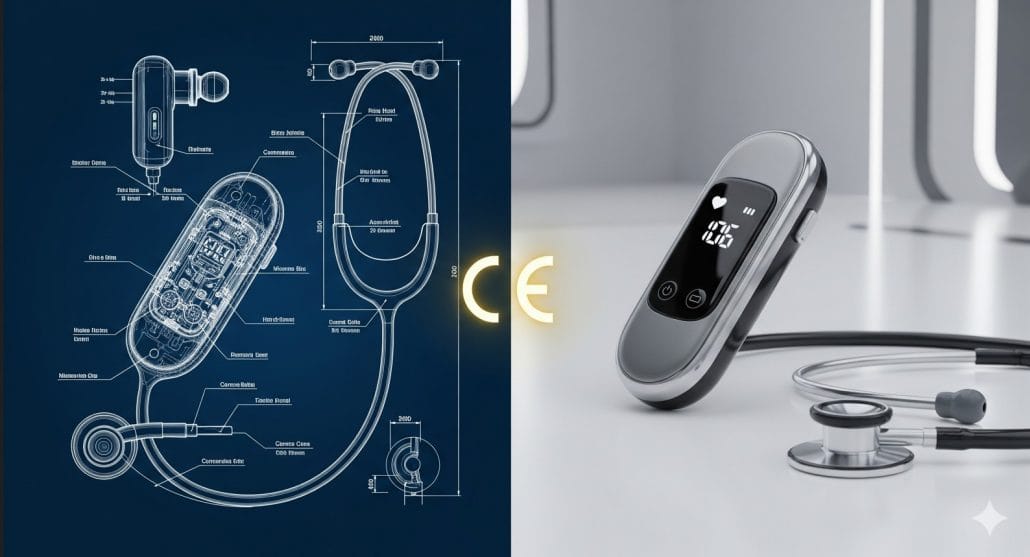
The CE mark (Conformité Européenne) is a declaration that a product complies with European Union health, safety, and environmental protection standards. Mandatory in Turkey by the Ministry of Health of the Republic of Turkey, this mark guarantees that your product is safe for human health. Without a CE certificate, you cannot place your medical devices on the market, sell them, or complete the Product Tracking System (ÜTS) registration.
Step-by-Step Medical Device CE Certification Process
While the CE certification process varies depending on your product’s risk class, it essentially involves the following steps:
1. Medical Device Classification: First, you must determine the risk class your device falls into according to the MDR rules:
Class I: Low-risk devices (e.g., bandages, stethoscopes)
Class IIa: Medium-risk devices (e.g., surgical gloves, hearing aids)
Class IIb: Medium-to-high risk devices (e.g., infusion pumps, ventilators)
Class III: High-risk devices (e.g., pacemakers, implantable defibrillators)
Establishing a Quality Management System (QMS)
Regardless of your device’s risk class, it is essential to establish and document a QMS that complies with the ISO 13485:2016 Medical Devices Quality Management System standard. This system allows you to control all your processes, from production to after-sales service.

Technical File Preparation
This is the most critical and detailed stage of the process. The key documents required by Notified Bodies for audits are contained in this file:
Device Description and Specifications: What the product is, how it works, and its intended use.
Labeling and User Manual (IFU): Documents containing all information for patients and users.
Design and Manufacturing Information: Manufacturing processes, flowcharts, and supplier information.
Essential Safety and Performance Requirements (GSPR): Evidence demonstrating how the device meets the requirements specified in Annex I of the MDR.
Risk Management File (ISO 14971): Analysis and management of all potential risks associated with the device.
Clinical Evaluation Report (CER): Analysis of clinical data and literature demonstrating that the device is safe and demonstrates its claimed performance.
Verification and Validation Tests: Reports on tests such as biocompatibility, electrical safety, software validation, and stability.
Notified Body Application and Audit
For all devices except Class I (sterile, measurement-capable) devices, you must be audited by a Notified Body. The Notified Body audits your technical file and quality management system to verify your device’s compliance with regulations.
Post-CE Certification Processes: ÜTS and EUDAMED Registration
Obtaining the CE certificate is not the end of the journey. Two more important registration processes await you before you can launch your device:
ÜTS (Product Tracking System) Registration: Mandatory for the Turkish market. Your CE-certified devices must be registered with the Ministry of Health’s system, along with your company information. Without this registration, devices cannot be tracked or sold.
EUDAMED Registration: Mandatory for the European Union market. Under the MDR, manufacturers, importers, and devices must be registered with EUDAMED, the European Medical Device Database.
How Much Does a Medical Device CE Certificate Cost?
It is impossible to provide a definitive figure for the CE certificate price, a frequently asked question. Costs vary depending on many factors:
Device Risk Class and Complexity: The cost of a Class III device is many times higher than a Class I device.
Notified Body Fees: Each body’s pricing policy varies.
Scope of Required Tests: Tests such as biocompatibility and clinical trials can significantly increase costs.
Consultancy Services: The scope of professional support you will receive.
Generally speaking, process costs can range from a few thousand euros to hundreds of thousands of euros. Remember, the cost of mismanaging the process can be far higher than receiving the right consultancy service.
MEDICAL CE
How to register with ÜTS
Why Should You Work with a Medical Device CE Consulting Firm?
The complex processes outlined above require expertise and a significant investment of time.


